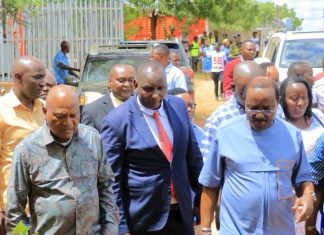
Wiper Party leader Kalonzo Musyoka on Wednesday hosted former Kitui Governor Charity Ngilu at his Yatta farm in what is seen as a significant political meeting amid shifting alliances in Ukambani. Photos shared on Kalonzo’s social media platforms showed the two leaders in a relaxed setting, sparking widespread speculation over the nature and outcome of their discussions.
Notably, Kalonzo posted the images without any caption, a move that quickly ignited reactions online. Supporters and critics alike flooded comment sections attempting to interpret the silent message, with some reading it as a strategic signal ahead of the 2027 political landscape. The meeting comes at a time when regional leaders are increasingly engaging in behind-the-scenes consultations.
As the images circulated, a section of online users launched into heated debates, with some critics dismissing the meeting while allies urged patience, insisting that such engagements are part of broader consultations for the region’s future. Despite the noise, the leaders maintained their silence, leaving Kenyans to draw their own conclusions from the symbolic encounter.
Confusion has gripped the Wiper Democratic Movement following a high-profile meeting between party leader Kalonzo Musyoka and former Kitui Governor Charity Ngilu at his Yatta farm. The unexpected اللقاء has stirred anxiety within party ranks, with insiders expressing uncertainty over the implications of the two leaders’ renewed engagement, especially given their complex political history.
Kalonzo’s decision to share photos of the meeting without any caption has only deepened the intrigue, triggering widespread speculation across political circles. While some supporters view the اللقاء as a step towards unity in Ukambani politics, others within Wiper fear it could signal shifting loyalties or a possible reconfiguration of influence ahead of future elections.
Within the party, mixed reactions have emerged, with a section of leaders calling for calm and patience, urging members not to rush to conclusions. However, critics and political observers continue to dissect the optics of the meeting, arguing that such silent but symbolic gestures often carry deeper political meaning than publicly declared statements.
The development has also sparked broader debate across the region, with analysts suggesting that the meeting could mark the beginning of strategic realignments in Ukambani politics. Whether it signals reconciliation, alliance-building, or mere courtesy, the Kalonzo-Ngilu encounter has undeniably injected fresh uncertainty and interest into the evolving political landscape.